
Build Smyth County's Former-Owner Trail
Smyth County keeps a land-record path reaching back toward its 1832 formation era. That depth makes a backward owner search practical. The local online index carries no published start year, so treat its coverage as unconfirmed. The Library of Virginia catalog fills the gap. It lists Smyth deed books, separate grantor and grantee indexes, liens, plat indexes, surveyors' books, and land-tax books. Specific reel spans accompany each entry.
| Record path | Known span | Where to search | Use for former owners |
|---|---|---|---|
| Virginia SRA | Online start year not stated by the county | State system under Smyth subscriber terms | Search current online land records |
| Deed books and indexes | Deed Book 1 begins 1832; general deed index runs 1832-1929 | Clerk vault and Library of Virginia reels | Trace earlier grantors and grantees |
| Deeds and liens index | 1942-1976, reel 319 | Library of Virginia catalog | Look for older encumbrances and parties |
| Maps and plats | Index 1832-1980; Plat Books 1-3, 1922-1955 | Clerk and LVA reels | Compare lot names, roads, and splits |
Work from the latest deed backward. Its grantor is the next name to chase. The online trail can run dry at some point. The Library of Virginia catalog then points to named reels instead of a vague archive lead. Deed Book 1 holds a direct Marion connection. Page 1 is a plan of the town. Older entries may be deeds, estate transfers, plats, or tax entries. Match the record series to the question you are asking.
Marion in Smyth County Deed Book 1
Smyth County's first deed book opens a local history trail along with its ownership chain. Deed Book 1 spans 1832 through 1836 across 513 pages. Page 1 is a plan of the Town of Marion. Books 2 through 8 run through 1865 on reels 1 to 4. An old description may cite a town lot or a street that no longer exists. Lay the deed beside that opening plan and the later plat records.
Treat the plan as a historic clue, not a present survey. Check the lot description, adjacent owners, roads, and later conveyances. Tie it to a modern parcel only after that. The Library of Virginia Smyth catalog gives the full book span and reel details.
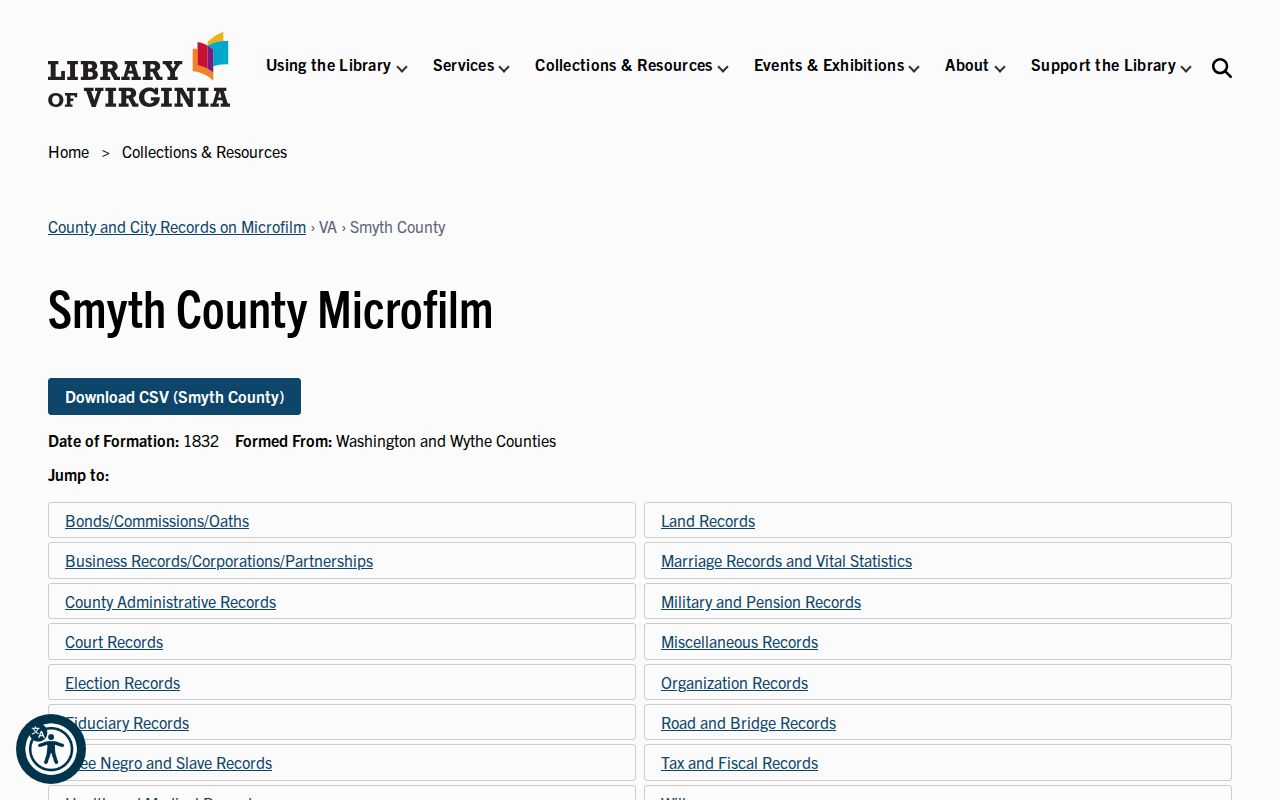
The catalog turns a stalled online chain into a concrete step. A named book and reel are waiting there.
Walk the Smyth Deed Chain Backward
Every former owner emerges one recorded transfer at a time. In each deed, the grantor conveys an interest and the grantee receives it. The same person often shows up as grantee in one instrument and grantor in the next. That is exactly how the chain links backward. Keep each citation. That way the next lookup starts from a verified name. It beats a guess based on the property's current address.
- Find the current deed and record the grantee, grantor, instrument date, and book/page.
- Search the grantor in the grantee index to locate that party's earlier acquisition.
- Read the next grantor and repeat, checking the legal description at each transfer.
- When the online range ends, use the appropriate LVA index reel and deed book citation.
- Grantor
- The party named as conveying an interest.
- Grantee
- The party named as receiving an interest.
- Chain of title
- The ordered series of instruments used to trace ownership back.
- Legal description
- The written land description, which can outlast an old street name.
Smyth County Grantor and Grantee Reels
The General Index to Deeds covers 1832 through 1929. It splits into separate grantor and grantee series. Reel 5 holds grantors in A-to-J and K-to-Z runs. Reel 6 holds grantees in the same alphabetical split. A later General Index to Deeds and Liens covers 1942 through 1976 on reel 319. These reels are precise fallback points when an online search stalls. They also surface recorded encumbrances.
Always search each party in the right role. A prior owner who took title appears as grantee at acquisition. The same owner appears as grantor on a later sale. Save the index citation, then read the underlying deed book itself. Note that the catalog's span is not a promise of online SRA coverage.
Probate Transfers in Smyth Owner History
Not every transfer in a chain is a standard sale. Some pass through an estate. Smyth's Circuit Court Clerk keeps probate and estate documents in the courthouse vault. The Library of Virginia catalog lists Will Book A from 1832 to 1844, Will Books 1 through 7 through 1901, and later will indexes reaching 1980. A will or an appointment shows who acted for the estate. A fiduciary deed or court order documents the actual property transfer.
Virginia death records carry their own access limits. A certified death certificate is generally limited to immediate family. Other requesters may qualify only for a verification of death if they show a direct and tangible interest. That record can support estate research but proves no title by itself. Compare it against the deed or probate order that concerns the land.
Local Context for Smyth Former Owners
The Southwest Virginia Heritage Library holds maps, manuscripts, and oral histories. It also collects newspaper clippings, family histories, and photographs. Its on-site computers offer FamilySearch, HeritageQuest, and Ancestry. The Smyth County Digital Collection adds more than 15,000 indexed local items. These span photographs, family Bibles, ledgers, and newspaper material. These collections help decode an old surname, tract name, or road reference. Use them to identify a historical person or neighborhood. Then return to the deed book for the legal transfer.
The county's recorded paper trail remains the source for title. Local collections supply the context a party index never will. Explore the Southwest Virginia Heritage Library collection and the Smyth County Digital Collection.
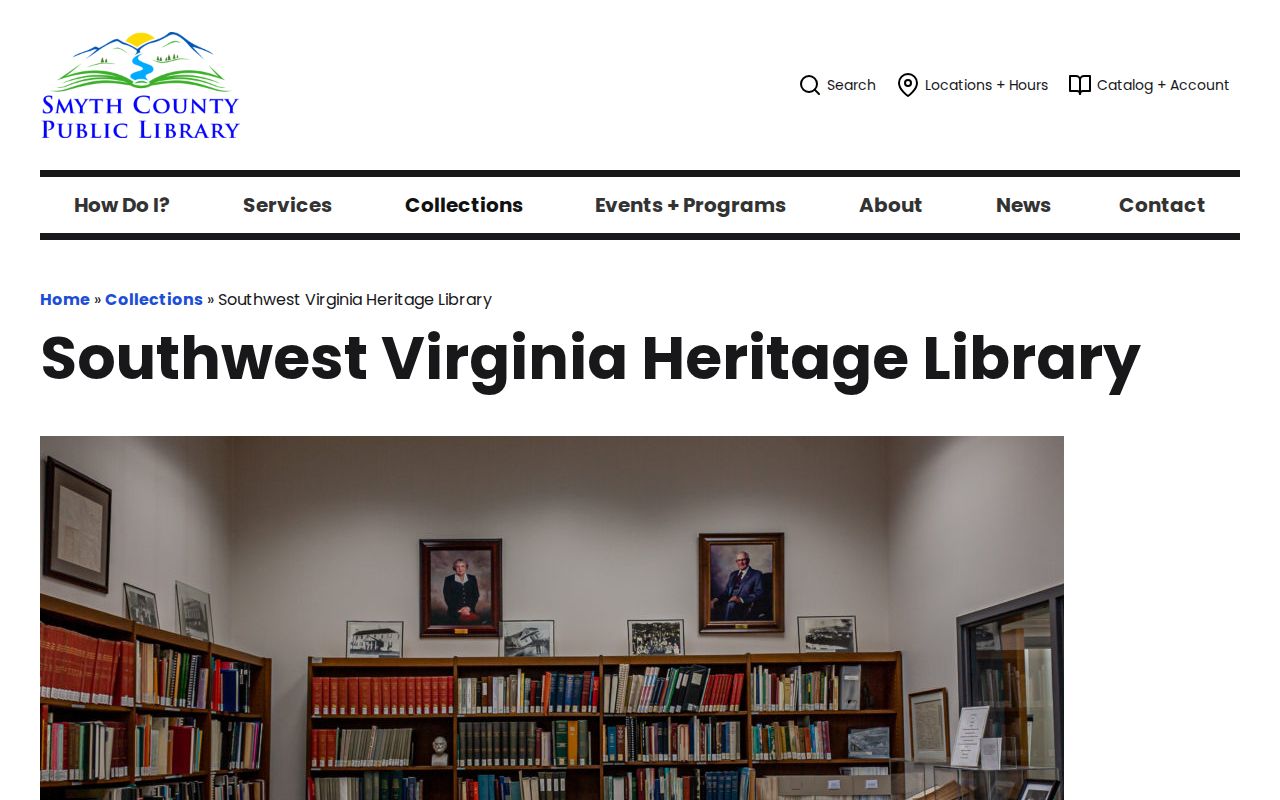
The heritage room helps explain the people and place names that fill older property records. See the Smyth County Digital Collection for the local historical materials it displays.
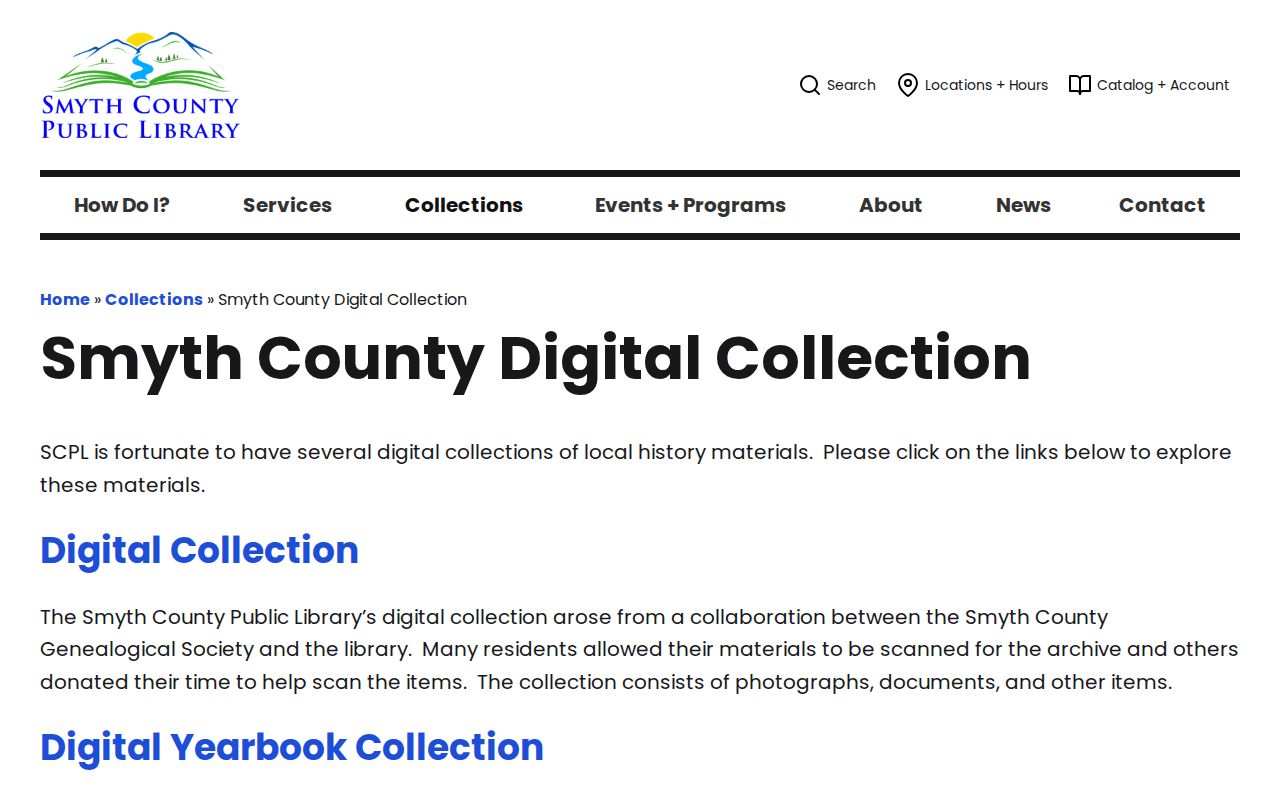
The digital collection is a history aid; the deed index supplies the transfer citation.
Smyth County's 2024 Preservation Trail
Smyth County history keeps surfacing in the Library of Virginia's preservation work. The 2024 Circuit Court Records Preservation Program covers Smyth birth registers spanning 1865 through 1883. Earlier grant awards reached deeper into land records. Deed indexes, plat books, land books, and chancery material all appear on those older lists. For anyone tracing former owners, that matters. A record can survive on a reel. It may sit in a finding aid, too. No image may exist online. The catalog names the series, though, not your parcel's full story. Locate the series in the finding aid first. Then ask the Clerk or the library about the specific reel or volume you need. The 2024 preservation announcement describes the statewide project and the Smyth County material.
Limits of a Smyth County Ownership Chain
A grantor-grantee chain is a path, not a title opinion. Treat it that way from the start. Names get spelled differently across decades. Transfers can involve estates or business entities rather than individuals. Older deeds may describe a tract instead of a street address. So a boundary or purchase question may call for deeds, probate records, plats, and a professional review. No one should rely on the answer before that work. The current card is useful for spotting the latest owner-of-record entry. Certified deed copies come through the Clerk. Need the present owner field instead? See the Smyth County current owner record. Use this chain for prior transfers, not as proof of current title.
How Deep Smyth County Owner History Reaches
Smyth County's deed record reach back to 1832, the year the county formed from Washington and Wythe Counties. Deed Book 1 opens that year. The Library of Virginia places Deed Books 1 through 8, ending in 1865, on reels 1 to 4, with later books following. Grantor and grantee indexes extend through 1929. One caution applies to online work. The county has never published a cutoff year for its remote SRA search, so do not assume it reaches back to 1832.
Lawful use. Use former-owner research for house history, estate work, and property diligence. Do not use names or addresses to track, expose, threaten, or harass any living person.